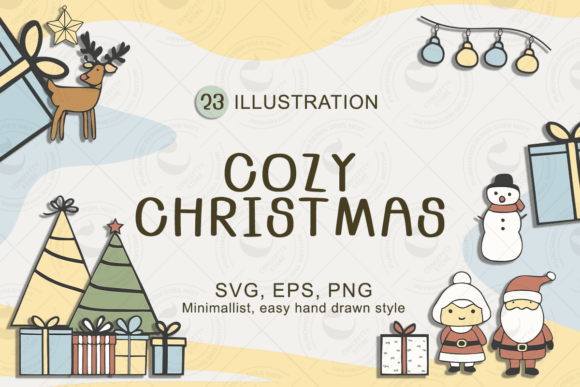
Cozy Minimalist Christmas Illustration Review
As someone who spends more time staring at stitch density charts and fabric swatches than watching holiday movies, I approach every new embroidery file with a healthy dose of skepticism. The market is flooded with complex, cluttered designs that look stunning on screen but fall apart when the needle hits the thread. That is why I decided to put the Cozy Minimalist Christmas Illustration through its paces. I wasn’t just looking for something pretty; I was looking for something functional, commercially viable, and emotionally resonant for my clients and customers.
The first thing you notice about this piece is its restraint. In a category often dominated by neon threads and excessive sequins, this design breathes. It creates an immediate sense of warmth and calm. For designers working in the handmade product space, particularly those targeting the modern boutique aesthetic, this mood is invaluable. It doesn’t scream for attention; it invites the viewer in. This is exactly the kind of visual personality that works well for personalized gift items where the emotional connection matters more than flashy decoration.
Real-World Application: The Tote Bag Test
To truly evaluate how this design performs, I moved beyond the digital preview and stitched it out. My test case was a classic canvas tote bag design scenario. I wanted to see if the minimalist lines would hold up against the heavy texture of the cotton canvas and whether the negative space would get lost in the weave.
The result was surprisingly effective. Because the illustration relies on clean shapes rather than intricate, tiny details, it translated beautifully onto the fabric. The stitch density was balanced enough to provide coverage without creating a stiff, cardboard-like feel in the material. When I held the finished bag, it looked like a high-end retail item rather than a hobbyist craft project. This level of polish is crucial for Etsy sellers and small shop owners who need their products to compete with mass-produced goods on quality alone.
I also considered this for a sweatshirt embroidery application. The cozy theme aligns perfectly with winter apparel. On a soft fleece or French terry fabric, the design takes on a different character—it feels softer, more intimate. However, this brings us to a critical consideration for any machine embroidery design: fabric choice. While it looks great on stable fabrics, applying this to stretchy knits requires careful stabilization to prevent distortion. If you are planning to use this for custom apparel, ensure you are using a cut-away stabilizer to maintain the integrity of the shape over time.
Where Caution Is Required
No design is perfect for every situation, and being honest about limitations is part of responsible reviewing. There are specific scenarios where the Cozy Minimalist Christmas Illustration might struggle. First, consider small hoop sizes. If you attempt to digitize or embroider this on a very small area, such as a standard cap front or a tiny embroidered patch, some of the subtle negative space might disappear. The eye needs room to interpret minimalism; cramming it into a three-inch circle can make it look sparse rather than elegant.
Additionally, textured fabrics pose a challenge. While the canvas tote worked well, try stitching this on a heavily bouclé wool or a thick, nubby knit, and the fine lines may vanish into the background. Similarly, dark fabric backgrounds require high-contrast thread choices. If you choose low-contrast threads, the visual appeal will drop significantly, making the design look muddy. Always inspect your thread colors against your fabric under natural lighting before committing to a full production run.
Another area to watch is curved surfaces like caps or sleeves. Minimalist designs often rely on straight lines and geometric balance. On a curved surface, these lines can warp, altering the intended aesthetic. If you are producing commercial embroidery items like branded hats, test the curvature impact thoroughly. Furthermore, avoid placing this design on garments that will undergo frequent, harsh washing cycles if you are using delicate thread types. The longevity of the finished product depends heavily on the durability of the materials used.
Stitching Clarity and Visual Impact
From a technical standpoint, the clarity of this design is its strongest asset. It avoids the common pitfall of over-stitching, which often leads to thread breakage and poor machine performance. The use of basic stitches—likely a combination of satin stitch for outlines and fill stitch for solid areas—ensures that even less experienced operators can produce consistent results. This reliability is key for craft business owners who need to scale production without constant troubleshooting.
The visual appeal extends beyond just the stitching. Because the design is clean, it allows the quality of the fabric to shine. This elevates the perceived value of the item. Customers are often willing to pay a premium for items that look professionally finished and thoughtfully designed. This design supports that narrative. It signals that the maker cares about aesthetics and detail, which builds customer trust and encourages repeat purchases.
For digital product sellers and those creating printable mockups, this illustration is versatile. It fits seamlessly into lifestyle images featuring coffee cups, blankets, and winter accessories. It enhances the storytelling aspect of your marketing without overpowering the main subject. Whether you are showcasing a kitchen towel or a nursery decor piece, the design adds a touch of seasonal charm that feels current and sophisticated.
Practical Designer Notes
- Test on Scrap Fabric: Never skip this step. Different fabric batches can react differently to tension and stabilizers.
- Check Thread Contrast: Ensure your chosen thread colors pop against your base fabric, especially on darker materials.
- Review Stitch Density: Verify that the design does not have overly dense areas that could cause puckering or needle breaks.
- Confirm Hoop Size: Make sure your machine’s hoop accommodates the design dimensions with adequate margin.
- Inspect Small Details: Zoom in on the digital file to ensure no critical elements are too small to stitch accurately.
- Use Proper Stabilizer: Match your stabilizer type (cut-away, tear-away, or wash-away) to your fabric weight and stretch.
- Black and White Mockups: View your design in grayscale to check for balance and contrast issues.
- Compare Backgrounds: See how the design looks on both light and dark fabrics to determine versatility.
- Licensing Check: Always confirm whether you have commercial rights to sell finished items made from this digital embroidery file.
Final Thoughts
The Cozy Minimalist Christmas Illustration is a strong addition to any designer’s library. It strikes a rare balance between artistic expression and practical manufacturability. It is ideal for holiday embroidery projects that aim for elegance over exuberance. Whether you are creating baby embroidery items, apron designs, or pillow covers, this design offers a reliable foundation for creating high-quality, desirable products.
By understanding its strengths and respecting its limitations regarding fabric texture and hoop size, you can leverage this design to create standout pieces in your small shop product lineup. It is a testament to the power of simplicity in design assets. For anyone looking to elevate their embroidery project game this season, this illustration is a smart, stylish choice.